7 ways occupational therapy helps people live more fully
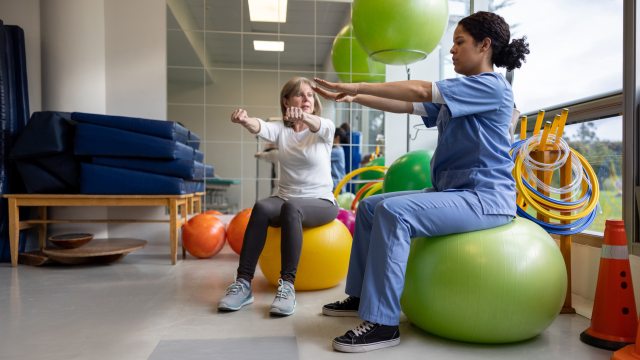
Here’s how OT empowers people of all ages with an illness, injury or delay.
Have you ever wondered what “occupation” has to do with occupational therapy?
The name stems from this therapy’s early days.
It took official shape in 1917. The U.S. War Department brought in “reconstruction aides” to help World War I soldiers get back on their feet. They used everyday occupations to help with healing.
Today, occupational therapy helps people learn or re-learn skills for independence, says Aaron Varney, OT, a therapist at PeaceHealth in Longview, Washington.
OT uses meaningful activities in recovery
OT focuses on meaningful activities for people with an illness, injury or delayed development. This means the therapy connects you to what’s meaningful in your life.
“The heart of OT is simple. If it matters to you, it matters to us,” says Varney. “Our mission is to help every patient thrive as independently and confidently as possible each day.”
For people recovering from acute injuries, inpatient OTs help patients learn skills that make it possible for them to leave the hospital or move to another facility for more rehab, says Miranda Kuhn, an OT at PeaceHealth in Longview, Washington. “We still assess the whole person and their personal goals, but we focus on basic everyday skills such as dressing, toileting and bathing,” she says.
Conditions that might lead to referral for OT
Many conditions make daily tasks a challenge. Anyone with a condition like that may benefit from occupational therapy.
This means OTs work with people of all ages and in all stages of life including those with:
- Acute or chronic injuries (neurologic or orthopedic), such as
- Stroke
- Vision trouble
- Trouble with thinking and thought processing
- Traumatic brain injury
- Spinal cord injury
- Upper‑extremity musculoskeletal injuries
- Long-term or progressive conditions like
- Arthritis
- Multiple sclerosis
- Alzheimer’s disease
- Chronic pain
- Post-traumatic stress
- Pediatric developmental delays or
- Learning difficulties
- Neurodiversity
- Behavioral challenges
How OT boosts quality of life
At PeaceHealth therapy sites, patients take an active role in defining goals. Outpatient OTs use their clinical expertise to partner with patients. They also keep in mind a patient's home, school or work environment.
Depending on the patient's needs, occupational therapists may:
- Teach adaptive strategies. These might be new habits or practices to make daily tasks easier. That’s everything from dressing and eating to cooking, cleaning and managing a schedule.
- Guide you through exercises. This builds strength, flexibility, endurance and function after an injury or surgery.
- Show ways to conserve energy. This also protects your joints and keeps daily tasks manageable.
- Recommend adaptive equipment. Bathing, driving and other everyday activities may be easier with the right adaptive tools. OTs can share what’s available and how to use them. Examples include things like reacher-grabbers, suction-based devices, grips, cuffs and extenders.
- Create custom splints or braces. These protect and support healing after fractures, tendon injuries or joint procedures.
- Address neurodiversity. Seeing or thinking differently than many others could well be more of a strength than a weakness. OTs can help you learn how.
- Help educate others. Caregivers and family members are an important part of your life. OTs help your network of loved ones understand how they can best support you.
Where OT happens
Occupational therapists work in all kinds of environments, including:
- Hospitals
- Outpatient clinics
- Skilled nursing facilities
- Schools
- Homes
Most insurance plans — public or private — cover OT when it’s medically necessary. Coverage varies, so it’s always a good idea to check with your provider to understand your specific plan.
If you or someone you know may benefit from occupational therapy, talk with your primary care doctor. They can help you decide whether OT is the right step and make a referral, if needed.