How to perform a skin self-exam
| Wellness | Healthy You | Aging Well
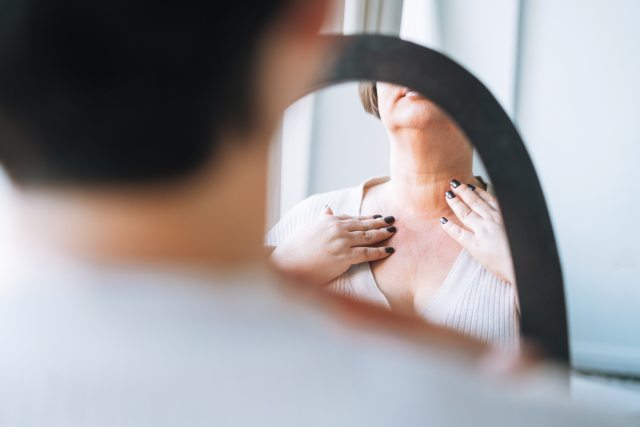
Mark your calendar to add this to your monthly health routine.
Skin cancer, including melanoma, is highly curable if spotted early.
A careful skin self-exam can help you identify suspicious growths that may be cancerous or that may develop into skin cancer (precancers).
The American Academy of Dermatology (AAD) recommends annual skin exams performed by a dermatologist. If you have a history of skin cancer, you may want to have exams more frequently. Ask your dermatologist for the right frequency for you.
Whether or not you've had skin cancer, it's a good practice to do your own checks, as well, from head-to-toe every month, according to SkinCancer.org.
Self-exam skin check from top to bottom
Keep a copy of the ABCDEs of early skin cancer detection with you during your self-exam. You'll also find it useful to have a handheld mirror, a full-length mirror and good lighting.
If you have a smartphone, you can snap a picture of the parts of your body you can't see easily. It's also helpful for recording a mole or spot that you want to re-check next month.
Top or upper part of your body:
- Examine your nose, lips, mouth and ears – front and back.
- Thoroughly inspect your scalp. You may want to get a friend or family member to help, but it’s also possible to use a comb or blow-dryer and mirror to shift your hair placement.
Middle section of your body:
- Check your hands – front and back, in between fingers and under the fingernails.
- Scan your arms. Standing in front of a full-length mirror, start at the elbows and scan all sides of your arms and underarms.
- Inspect your midsection. Focus on the neck, chest and torso. Don’t forget to inspect the underside of your breasts.
- Scan your upper back with the full-length mirror and handheld mirror. View the back of your neck, shoulders, upper back and any part of your arms that weren’t viewable earlier.
- Review your lower back. Using both mirrors, check your lower back, buttocks and the back of both legs.
Bottom or lower part of body:
- Sitting down – check the front and sides of each leg.
- Finish with ankles and feet, don’t forget the bottom of your feet, toes and nails.
Performing skin self-exams should be included in your monthly health routine.
"You'll want to schedule an appointment with your dermatologist if you notice something of concern," says Sean McElligott, MD, a PeaceHealth dermatologist in Eugene, Oregon.
Use sunscreen to reduce aging effects and risk of cancer
In between self-exams, make a practice of using sunscreen of at least 30 SPF, as recommended by the AAD. Reapply sunscreen every 2 hours or sooner, if you're swimming or sweating.
"Nowadays there are many cosmetic skin products available that attempt to minimize skin aging. I think the single most effective skin product on the market is sunblock," says Dr. McElligott. "Sun protection is known to slow the natural aging of the skin as well as reduce skin cancer risk."