Tips on reading a food label & why it matters
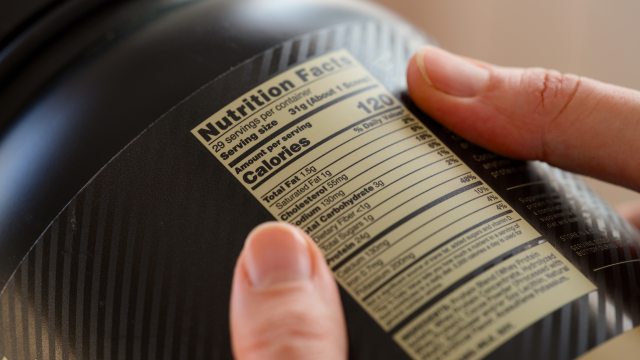
Use nutrition facts to enhance your diet and your health.
When you look at a food label, do your eyes go straight to calories?
Calories might seem like the “star” of the show but there’s more information there to use — especially if you’re managing a health condition like heart disease, high blood pressure, kidney disease or diabetes.
Food labels inform decision-making
“Reading nutrition facts helps you make decisions about how you nourish your body,” says Cecelia Jacobson, RD, a dietitian at PeaceHealth in Springfield, Oregon.
Making a habit of label reading can help you reshape your buying (and eating) patterns. This is especially helpful if you’re cooking at home, which is typically healthier than takeout, she says.
You’ll have your own reasons to read labels
“What you eat — and how much of it — can make a difference in your health,” says Jacobson. “Food labels help you make more informed choices for yourself and your family.”
You might look at food labels very differently from the way others do, depending on your health goals and stage in life.
Trying to lose weight? Calories might be top of mind. Are you an active young athlete? Then you might not care as much about calories as you do the level of protein.
If you’re caring for a loved one who has heart disease, you’ll pay closer attention to a product’s saturated fats, cholesterol and sodium.
And carbohydrates might mean more to you if you have diabetes. Same goes for sodium if you have kidney disease or high blood pressure.
Ingredient lists are helpful. This is true if you’re a parent trying to reduce food dyes or preservatives in your family’s diet.
And if you have particular sensitivities or allergies to any kinds of food, the list is a must-see.
What you’ll find on food labels and where to focus
Labels in the US include all macronutrients (fat, protein and carbs) plus many micronutrients (e.g., potassium, calcium, vitamin D and iron).
Reading a food label might sound a little boring.
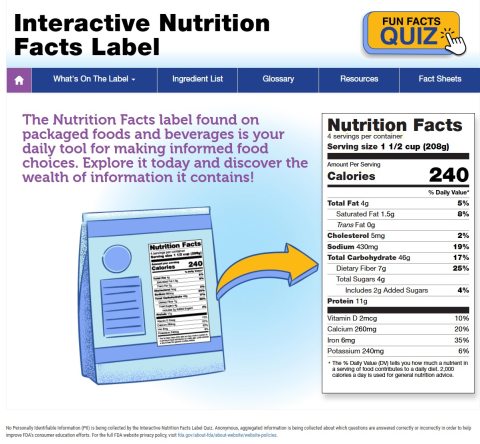
But this Interactive Nutrition Facts Label tool makes it more fun and inspiring.
No matter what you’re looking for in the label, it might seem overwhelming to have all this information.
Where should you start?
Start with these tips on reading food labels
Jacobson offers a few tips for making the most of food labels:
- Verify serving size. Some packages can look small but still contain more than one serving. Newer labels will show nutrition facts in separate columns by serving size and for the whole package.
- Daily values are based on 2,000 calories per day. If you eat fewer (or more) calories than that, your nutrients will vary accordingly.
- Aim low for these nutrients:
- Saturated fat - less than 6% of total daily calories, if you have heart disease and less than 10% of calories if you’re at low risk for heart disease.
- Sodium – fewer than 1500 milligrams if you have a condition that’s sodium-sensitive and fewer than 2300 milligrams of salt per day for all others. Read tips on reducing sodium intake.
- Sugar - less than 25 grams (6 teaspoons) of “added sugar” for women and 36 grams (9 teaspoons) for men. Read tips on reducing added sugar.
- Trans fat - avoid these altogether.
- Aim higher for vitamins, minerals and dietary fiber, depending on your age and sex. Fiber recommendation is 25-35 grams per day. Read the chart of nutrient recommendations by age.
- Scan the ingredient list. Ingredients in the largest quantity (by weight) will be listed first. Food manufacturers are also required to state if a product contains any ingredients from eight major food allergens:
- Milk
- Eggs
- Fish
- Crustacean shellfish
- Tree nuts
- Peanuts
- Wheat
- Soybeans
- Check for less-common nutrients. Are you getting enough? Labels now include vitamin D, calcium, iron and potassium because many Americans are low in these.
“It’s easy to get caught up in the details and think too much about it,” says Jacobson. “As a general rule, look for products with minimal ingredients and preferably ones you can identify and pronounce.”