
One of the nation’s best stroke survivor groups helps patients and care partners
| Healthy You | News
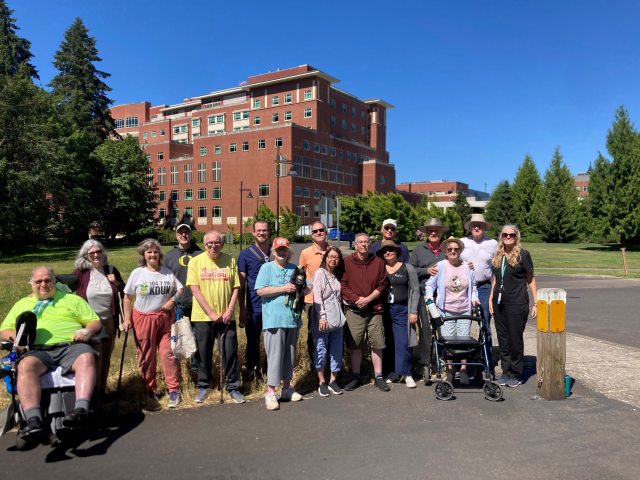
Members encourage each other to overcome challenges after stroke.
It has been called one of the “best stroke survivor programs ever seen” by experts who know.
The RiverBend Stroke Survivor & Caregiver Support Group is part of PeaceHealth’s Comprehensive Stroke Center. While it’s based in Springfield, Oregon, its impact can be felt much farther.
Group has been going 10 years and counting
Originally started in 2016, the survivor group has grown and evolved over the years. Victoria Moran, the administrative specialist with the Stroke Program, has led it since 2020.
In fall 2025, the DNV Healthcare Stroke Certification surveyors declared it one of the “BEST in the nation” for accomplishing its purpose, which is to give stroke survivors and their care partners a supportive environment.
“This group is where people can celebrate their achievements and encourage one another,” says Maggie Shatzel, manager of the Stroke Program in Springfield. “A longtime group member announced at a recent meeting, ‘I have something to show you guys today’ and he stood up for the first time from his wheelchair…to a round of applause.”
Members can attend two monthly offerings
Stroke survivors and their care partners can participate in one or both offerings every month:
- In-person on the first Wednesday of the month from 1 to 2:30 p.m. in Eugene. It features special speakers or activities. The location has secure parking and comfortable accommodations to make it easy for members to get around, whether they use a wheelchair, walker, cane or other assistive device.
- Virtual on the third Wednesday of the month from 10:30 a.m. to noon over Zoom. This meeting is for stroke survivors and care partners to share their victories and struggles.
Moran facilitates the face-to-face meetings while a stroke survivor hosts the peer-to-peer virtual calls.
What makes this group one of the BEST
Surveyors cited the group’s growth, robust engagement and high-quality guest speaker schedule as proof of its stellar status.
A sampling of stroke group activities includes:
- Painting and exhibiting group artwork at a local art museum
- Presentations on:
- Managing fatigue after stroke by Elaine Skalabrin, MD
- Compassionate communication after a stroke by Megan Dorenkamp, MD, clinical neuropsychologist; and Laurel Jeffrey, licensed marriage family therapist
- Living with atrial fibrillation (Afib) by Hiro Kawata, MD
- Goal-setting after a stroke by Emily Jaksich, NP
- Nutrition-related topics by Cecelia Jacobson, RD
- Speech, occupational and physical therapies by PeaceHealth therapists
- Reducing, reusing, recycling, rethinking by a local sustainability expert
- A demonstration of accessible gardening tools by a Master Gardener
- Connecting through stories hosted by the University of Oregon Speech Language Pathology professor and students
- Interaction with pet therapy dogs
Healing and thriving with help from the group
Moran’s dedication to a quality program comes from the experience of caring for her own mother who had a stroke in 2010. While her mom is now gone, she often uses her memories as a care partner to look for ways to make every meeting of interest and value.
“I am committed to making the lives of stroke survivors and their care partners better by my small contribution of facilitating their support group,” she says. “My hope is that members don’t forget they had a stroke but instead focus on thriving after a stroke.”
Shatzel too notes that the value of being part of a support group can’t be understated. Her mother also had life-changing health concerns (breast cancer). They found that participating in support groups made a profound difference.
With her background in neuroscience nursing and public health, Shatzel says, “I believe social connections forged in a group like this are an important part of healing.”
Group meetings also give stroke teams the chance to see the remarkable change in patients long after initial treatment for stroke. “Doctors and nurses wouldn’t always know how their patients are doing unless they see the progress themselves,” she says.
Who can be part of this group
“Membership is open to anyone who has an interest in stroke recovery,” says Moran. “That includes family members, friends and caregivers. All people of all ages are welcome.”
And there is no charge to participate in this group.
“Folks from out of town will sometimes join the online call,” Moran says. “We do have people attend from the coast and other parts of Oregon via Zoom and in person.”
What to expect in the stroke survivor group
“There is no pressure to share. You can leave at any time if you are feeling tired or uncomfortable,” she says.
You don’t have to RSVP or register. But you will need to provide your email address to receive the link for the virtual calls or the location of the in-person meetings.
There is an audio-only option for the virtual meeting. If you don't have a computer, just call in with your phone.
Shatzel notes that the effects of stroke can vary. “You might not see from the outside what someone struggles with,” she says. “Some survivors have trouble walking or lifting while others have memory or communication issues. This group program tries to take that into account so everyone can participate to whatever degree they can.”
Stroke survivors make this group great
“I think our support group is so good because the folks who attend are willing to engage in all the various activities and are really good people,” says Moran.
The program is a blueprint that can really be replicated anywhere. It just takes dedicated leadership and engaged members.
Shatzel echoes the sentiment. She’s always inspired at the meetings…sometimes by the speaker and other times by an attendee. “Going to the support group always fills my cup,” she says.
If you or a loved one is interested in participating in one or both stroke survivor meetings, call 541-222-8461 for more details.
If you don’t live in Oregon, Moran has connections with the larger stroke community. She may be able to help you find other online meetings or an in-person stroke support group near you. Or check the American Stroke Association Support Group Finder.
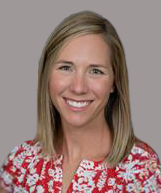
Emily M. Jaksich NP
Emily M. Jaksich NP practices Geriatric Family Medicine in Springfield.
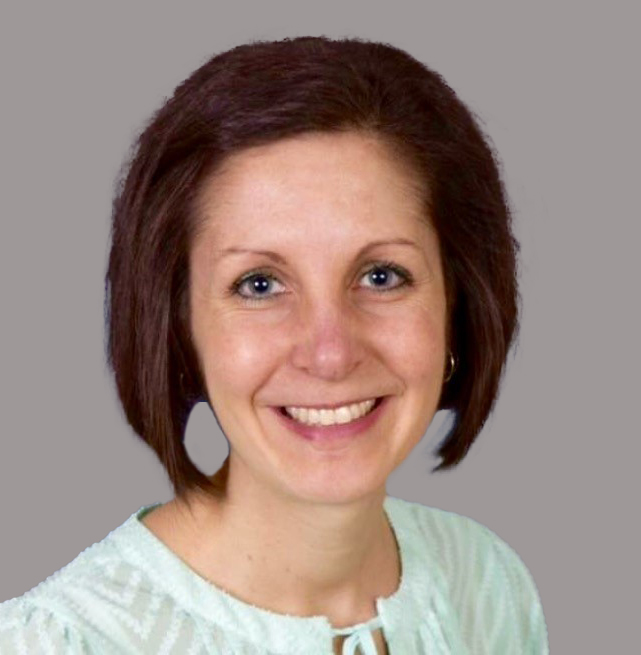
Cecelia Jacobson RD
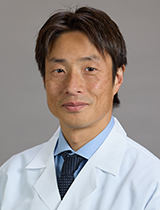
Hiro Kawata MD
Dr. Kawata is a heart rhythm expert at Oregon Heart & Vascular Institute. He focuses on the heart’s electrical system and cares for patients with irregular heartbeats.
Dr. Kawata specializes in less-invasive procedures like catheter ablation. He uses small tools and tiny incisions to restore heart rhythms. Because the cuts are small, patients can recover faster and with less pain.
He is board certified in cardiac electrophysiology, heart disease and internal medicine. These credentials reflect his commitment to high standards for care. They also mean he stays current with the latest treatments and techniques.
Dr. Kawata brings a global perspective to his practice. Before coming to Oregon, he trained and worked at top medical programs across the United States and Japan. This included posts in Ohio, Southern California, Hawaii, Tokyo, Kobe and Osaka.
His research focuses on improving treatments for heart rhythm disorders. He has published many articles about mapping the heart and treating serious heart rhythm conditions.
Outside of work, Dr. Kawata enjoys learning Spanish and traveling. He also jogs and plays soccer.


