The Sisters of St. Joseph of Peace
|
The Sisters of St. Joseph of Peace
Hope, healing and love have been driving PeaceHealth forward since its start in 1890, when two young women from the Sisters of St. Joseph of Peace Order in New Jersey stepped off a train in what was then a remote logging settlement on the shores of Bellingham Bay, originally named Fair Haven or “safe port.”
Their charge: build a hospital to care for loggers, mill workers, fishermen and their families.
It was a time of rapid growth and expansion for the previously small pioneer outpost. According to the Fairhaven Herald, the population leaped from around 150 in 1889 to 8,000 in 1890, and with rapid growth came an increasingly urgent need for medical care.
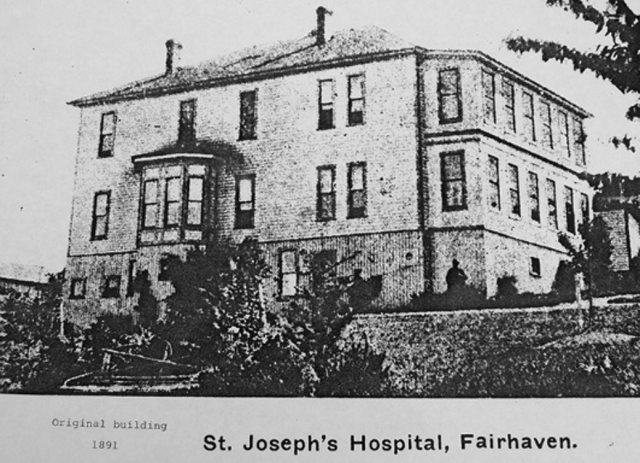
Sisters Teresa Moran and Stanislaus Tighe had no money and only three months of nursing training. With donated land and plans drawn up by J.J. Donovan of the Fairhaven Land Company, the Sisters set out to raise $30,000 from loggers, prospectors and the town’s businesspeople. In addition to requesting donations, they sold ten-dollar tickets in exchange for the promise of one year of hospital services. In just four months, the first St. Joseph Hospital was built.
“The first St. Joseph Hospital in Whatcom County was a small two-story frame building that could hold about 30 patients. The first floor held an office, pharmacy, a private room, a dining room, a kitchen, a lavatory and a ward for 10 beds; the second floor had another 10-bed ward, two single rooms, a dormitory for the Sisters, a chapel, a linen room and a lavatory. Outside was a laundry and mortuary room.”
-- “We Carry On the Healing – PeaceHealth and the Sisters of St. Joseph of Peace” by Susan Dewitt
Origins in Social Justice
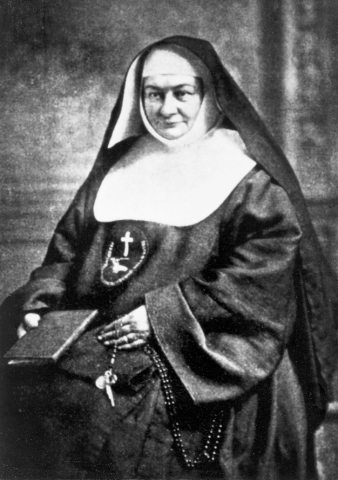
Mother Francis Clare, who founded the Order of the Sisters of St. Joseph of Peace (CSJP) in 1884 in Newark, New Jersey, was an activist Irish nun whose reformist zeal often put her at odds with Church hierarchy. She became internationally known for her work and writing on behalf of women and the poor. She believed peace comes through social justice — serving the poor and vulnerable, addressing inequality and protecting human dignity. That core belief guided the founding Sisters and those who followed.
Adapting to Modern Times
In PeaceHealth’s early years, the Sisters owned and operated each hospital as a ministry of the church, managing everything from patient care and physician contracts to staffing, finances and operations. That began to change after Medicare was created in 1965, when government funding required hospital finances to be separated from the Sisters’ records. Growing legal risks also made a separate operating structure increasingly necessary.
In the early 1970s, the Sisters decided to form a separate structure to oversee their hospital services, more effectively meet the challenges of contemporary healthcare, and partner with qualified laypersons who shared in this important work.
Continued Ties to the Catholic Church
The organization's name was changed to PeaceHealth in 1994, and in March 1997, the health system's Board of Trustees was granted status as a Private Pontifical Juridic Person to ensure the continuation of the healing ministry as a Catholic health system under lay leadership in service to the communities.
In 2018, for the first time in PeaceHealth’s history, a lay leader was appointed Board Chair, placing PeaceHealth's leadership in the hands of the community to carry forward the ministry of service.
An annual review of Mission Integration includes examining policies and practices as well as onsite visits and listening sessions in each PeaceHealth community to encourage open, honest dialogue with caregivers. These sessions help identify how well the Mission and Values are lived — not only in word but in action, presence and service. Recommendations are shared with sponsors and leadership to inform operational planning. An official Mission and Values Report is submitted to Rome every three years. [Link to Mission & Values Report]
Legacy of Courageous Caregivers
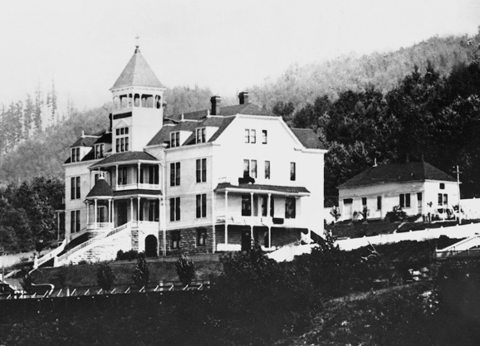
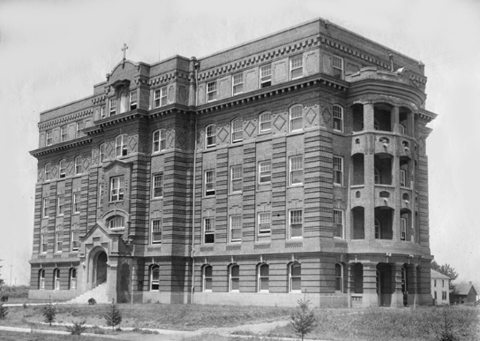
What started from two Sisters walking from lumber camp to lumber camp to raise funds has grown into 10 medical centers and specialty hospitals across three states, with over 16,000 caregivers and 3,381 physicians and clinicians in 200 clinics.
The founding Sisters came because people were suffering and no one else was there to care for them. Their pioneering work ushered in more than a century of Catholic healthcare throughout the rural Pacific Northwest.
“When we came out from the East in 1890, we wanted to go in places that other people weren't serving— the loggers and miners, the fishermen, and all those. They heard the cry of the people in the northwest... I think about those women. They had grit and they had courage. The image that comes to mind is relay races, when you hand on the tag to the person that is running right beside you. That's really the image I like to use. The time now for sisters is, in a sense, to step aside and let the next runner carry on.”
-- Sister Sheila Lemieux, CSJP 21st General Chapter