Tips on diet and nutrition when you're pregnant
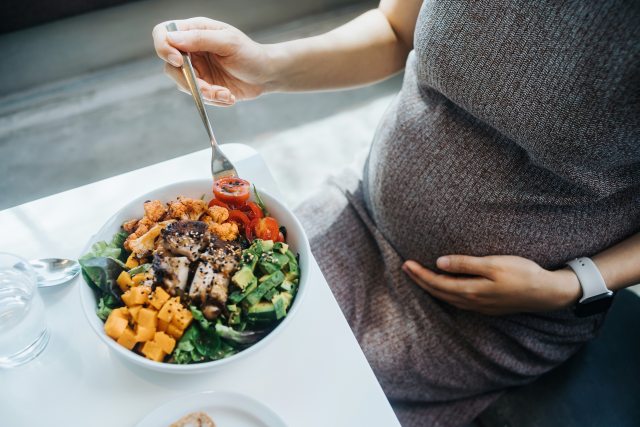
“Eating for two” means being picky about what you put on your plate.
When you’re expecting a baby, you might wonder how to adjust your eating habits.
“Getting enough of the right nutrients is important to keep yourself healthy and to give your baby a good start,” says Nathan Amrine, MD, an obstetrician/gynecologist at PeaceHealth in Vancouver, Washington. “From morning sickness to odd cravings, people often have lots of questions about food during pregnancy.”
Below are a few key things to keep in mind when you’re eating for two:
Get DAILY
- Water to prevent dehydration – aim for about 64 ounces or 8 glasses of water.
- Colorful veggies and fruits to give you and your baby a variety of nutrients – 6-8 servings.
- Protein foods such as lean meat, eggs, beans, nuts and dairy for muscle, cell and nerve function – 4 servings.
- Whole grains with fiber for vitamins, minerals and to prevent constipation – 3 servings.
- Dairy or other calcium-rich foods for development of bones, teeth, muscles, heart and more – 4 servings.
LIMIT
- Milk – more than a cup or so a day can lead to excess weight gain.
- Fish – mercury is a risk with some types of fish; you can have 12 ounces a week of fish like tuna, salmon or tilapia.
- Caffeine – this can cause dehydration, nausea and light-headedness; aim for no more than 200 mg. of caffeine (about 16 ounces of regular coffee) a day.
AVOID
- Sugary drinks – these empty calories can lead to excess weight gain.
- Artificial sweeteners – these can increase your appetite and lead to weight gain.
- Foods that can cause food poisoning and pregnancy complications. Examples of these foods include:
- Unpasteurized milk, cheese, honey and juice
- Raw meat
- Processed meats such as hot dogs
- Shark, swordfish or mackerel – these tend to have higher levels of mercury. This can hurt your baby’s developing brain and nervous system.
- High-carb foods (e.g., sweets, muffins, sweetened cereal, rice, noodles) – these are empty calories that can lead to weight gain. They can also contribute to gestational diabetes.
“You’ll want to be careful about not eating more than you need to,” says Dr. Amrine. “Staying at a healthy weight will help you and your baby in the long run.”
Talk to your doctor or care team for medical advice specific to your situation.