
How pet owners can prevent trips and falls
| Healthy You | Aging Well | Safety
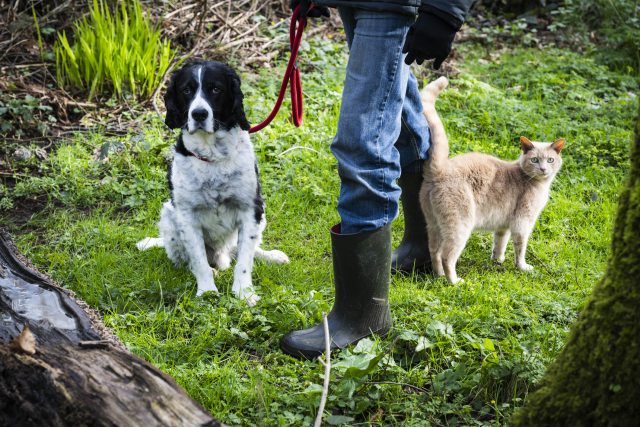
Use these strategies to stay safe while you enjoy your dog, cat or other companion animal.
If you worry about falling, you know all about the typical hazards that might cause a tumble. Throw rugs, tread-bare slippers, wet floors and so on.
As you get older, you might wonder if you can keep your lovable fur family and still stay safe.
How pets can increase risks for falling
There are lots of ways a beloved animal can make moving around a bit tricky.
- Strong dogs can pull you off balance.
- Cats may dart under foot and send you sprawling.
- Excited pups can jump up and knock you over.
With just those few examples, it can be easy to think it’s time to give up a pet.
Not necessarily.
“It doesn’t have to be all-or-nothing,” says Hilary Cornelius, OT, an occupational therapist at PeaceHealth. “There are valid reasons to keep your pets — especially if you can’t imagine life without them.”
How pets can promote physical and mental health
Research has found that pets can play an important role in people’s mental and physical health.
One study showed that owning a pet can have a positive effect on heart health, including lower blood pressure readings.
“Dogs and cats can make us more physically active,” says Cornelius. “Think about it. You’re more likely to walk because your dog needs a walk. Your love for your pet leads you to do something that’s good for them and for you.”
A review of several studies also looked at pet ownership for mental health, including things like reducing loneliness, managing stress or increasing life satisfaction.
“If your pet is important to you, you can explore ways to make it work,” she says.
Ideas to reduce the risk of falls caused by pets
So how can you avoid falling if you live with companion animals?
Cornelius offers several ideas to make life with pets a little safer.
- Pick the right leash and lead system for your pet’s size and personality. A harness may be better than a collar for control over an energetic pup. A retractable leash may be okay for a more sedate dog.
- Keep the leash short. This keeps your dog from wrapping it around your legs.
- Try training. Has your pup been through obedience school? Teaching them to sit, stay and not jump up can help both you and them.
- Put toys away. Keep the floor clear of trip hazards – especially balls or bones. If your dog is smart, you might even teach it to put them away.
- Limit multi-tasking. Are you picking up after your pooch on a walk? It’s a lot to fumble with bag while holding onto your dog and watching for traffic on the path. Think of ways to make it easier. Walk with a buddy who can hold the leash while you pick up. Or wrap the leash around a post or bench as you scoop.
- Keep water dishes from spilling. Put a small towel under to reduce the chance of wet spots on the floor.
- Use treats or toys for distraction. Does your cat get under foot? Carry treats in your pocket and toss a few in the opposite direction. While your cat goes for the treat, you may have time to get to where you’re going.
- Plan for after dark. Consider installing motion-detection night lights. Crate-training may also reduce your risk of stepping on or tripping over a pet in the dark.
- Enlist help from others. Can a family member help manage your pet? Or maybe hire a professional for walks or training. Then you can still enjoy time with your pet without having full responsibility for all aspects of care.
“In the long run, it’s a personal choice about whether to keep a pet or not,” says Cornelius. “If the benefits outweigh the risks, there may be several ways to do it safely.”


