
Just a cough or something more? COPD signs family may notice first
It's important to get tested early for this progressive condition.
Do you have a nagging, wet cough and sometimes feel short of breath? Do loved ones tell you you're wheezing or breathing noisily?
Friends or family may be the first to notice these early symptoms of COPD, shares PeaceHealth's Susan Cho, MD. Dr. Cho is a longtime pulmonologist, which is a doctor who specializes in lung diseases and creates treatment plans to help people breathe easier.
"COPD is a disease of both the airways and the lung tissue itself, which makes it difficult to move air in and out of your lungs," she explains from the Pulmonary and Sleep Medicine department in Bellingham, Wash.
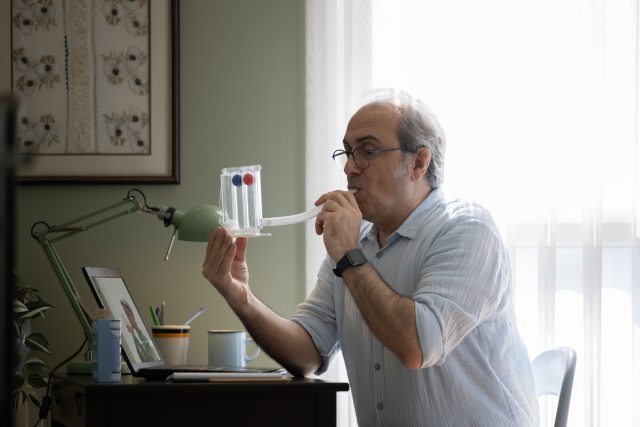
It stands for chronic obstructive pulmonary disease, and it's one of the easiest diseases to test for. At your doctor's office, you just blow through a tube into a machine that measures how fast you exhale. It's called a spirometer.
COPD is manageable when caught early
November is COPD Awareness Month. PeaceHealth care clinicians want you to know how simple and important it is to get tested early for this progressive lung disease. So, if diagnosed, you can get a head start to warding off hospitalizations and complications later in life.
"Early recognition is key," Dr. Cho says. "Left untreated, there's a lot of permanent consequences that are expensive, not only to the patient in terms of your well-being, both mental and physical, but financially too."
Workplace, childhood diseases can cause COPD
COPD is classically related to smoking, either personally or secondhand, but it also happens to people who have never even puffed a cigarette. Other common causes, according to the COPD Foundation, are:
- childhood respiratory diseases like asthma, pneumonia or tuberculosis
- exposure to second-hand smoke as a child
- family history
- outdoor pollution
- premature childbirth (can make lungs weaker)
- Smoke, dust and fumes at work or while enjoying hobbies
- Fine dust and metal or chemical fumes are large drivers of COPD, according to the National Institutes of Health. People who work in fields such as construction, refinery and welding are often at a higher risk, Dr. Cho adds.
COPD symptoms can start in your 40s
Many people might think that COPD only strikes senior citizens, but symptoms start to appear around age 40, according to a study in the Journal of Clinical Medicine.
"Most people with COPD are still working and functioning," Dr. Cho says.
Treatment generally includes inhalers, antibiotics and biologics, which reduce flareups. Flu and pneumonia vaccines are also usually recommended for COPD patients to prevent severe breathing problems that can lead to hospitalization.
"COPD makes you more prone to infections such as the flu which can cost you in terms of well-being, health and also lost work hours," she says.
Smoking is the highest risk factor for COPD. But checking out recurring coughs, visiting your primary care provider and taking a simple breathing test are essential to avoiding complications.
"We can do more with the right treatments and what you should avoid earlier rather than later," shares Dr. Cho. “You can enjoy a good quality of life."
To see if you or a loved one may be at risk of COPD, take this free COPD Foundation Screening quiz.


