
Community gardens: Where growing healthy kids is the mission
| Wellness | Mental Health | Healthy You
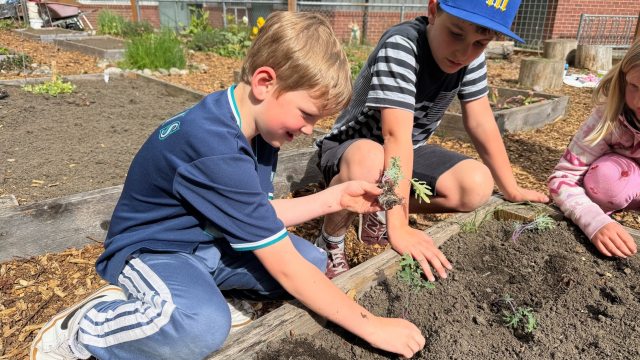
Neighborhood gardens provide the dirt, tools and teaching. Your family takes home the fresh vegetables and good vibes.
Kids and gardening go together like Linus and the Great Pumpkin. Planting keeps them busy and entertained, while also growing their social, emotional and attention skills.
Gardening uses all our senses
“When you get outside and do things with your hands, you can’t think about anything else,” explains Liz Cattin, PeaceHealth Community Health director for the Longview, Wash. region. “Gardening is low stress, it's tactile and it uses all your senses.”
To kids, digging in the dirt seems like a fun treasure hunt, while it’s really helping them reset their minds and pay attention. Zooming between beds of squash and fetching gardening tools can also help your busy bees burn off restless energy.
Best of all, you don’t need a big yard or acres of farmland to enjoy these positive effects. With the help of local organizations, community gardens offer small plots of soil, access to garden tools and fellow gardeners for free help and advice.
How to find low-cost community gardens near you
In the moist and green Pacific Northwest, Oregon, Washington and more states are blessed with abundant networks of low-cost, public community gardens. Many are run by city parks, churches or nonprofit charities, so you don’t have to be rich to join.
For instance, PeaceHealth supports several PNW community gardens. As a nonprofit hospital, one of our missions is to give back to our neighbors.
We’ve taken a pledge to improve residents’ access to fresh, local fruits and vegetables and decrease child hunger in the cities around our hospitals. PeaceHealth donates to food pantries, promotes free farmstands and partners with gardens in Springfield, Ore., Longview and Whatcom County in Washington.
Here are a few gardens our Community Health teams support:
- In Springfield, Oregon, Willamalane Parks and Recreation offers several community garden plots, for just $20 to $40 through November. Water, tools and compost are provided. Across town, PeaceHealth Sacred Heart Medical Center also helps new gardeners discover their green thumbs at the First Presbyterian Church’s Community Sharing Garden in Cottage Grove.
- In southwest Washington, volunteer group Latinos Unidos Y Floreciendo welcomes new and experienced gardeners to plant and harvest foods at their plot at Heritage Farm Community Garden with help from PeaceHealth. The Heritage Farm garden is hosted by Washington State University and includes 88 other plots for rent to the public year-round.
- In northwest Washington, nonprofit group Common Threads Farm teaches kids how to garden. They also offer after-school activities and free camps for kids, from kindergarten through fifth grade, where they can learn to plant, grow and also cook their vegetables. There’s even a food truck called Basil that offers healthy vegetarian meals and snacks.
“The focus is on creating a welcoming space where people can grow food, learn about gardening and take home fresh produce,” explains Michelle Saunders, PeaceHealth’s Community Health Director for Oregon.
Affordable and healthy: The many benefits of community gardens
Because tools, soil, water and fertilizer are provided, community gardens are more affordable than private gardens. They also come with volunteer teachers and fellow gardeners. But you might be surprised how gardening may help ease stress and make you more fit.
Here are some of the many ways they help your body and spirit:
1. Growing plants outdoors with others is good for you and your children’s social and emotional well-being.
It decreases anxiety, depression and loneliness. Research suggests neighborhood gardens help you:
- Build connection with others – Make friendships with your plot neighbors over zucchini plants and sneaky-rabbit stories. You might also swap or share garden bounty with fellow gardeners.
- Feel more hopeful – Being outdoors enhances feelings of well-being and relaxation, while seeing how your plants are doing gives you something to look forward to.
- Increase self-confidence – People who garden report feeling pride in their efforts and a sense that they are accomplishing something important.
- Inspire continued learning – Even gardening veterans know there’s always something to learn.
2. Teach kids emotional intelligence.
Young kids and older adults can discover common ground over new sprouts, insect colonies and each other. So children learn how to socialize with people of all ages and respect others’ opinions.
Physically, community gardens can improve your health as it promotes:
- Mobility – Tending a garden can keep you moving, bending, kneeling and more.
- Heart health – Gardening is considered a moderate-intensity activity, which strengthens your heart and makes it pump blood more efficiently. That lowers your resting heart rate and reduces blood pressure.
- Stamina – Seeing results doesn’t happen in one day or one sitting. It takes weekly or even daily attention.
- Strength – Lifting bags of compost or digging in the soil builds muscle.
- Balance – Walking on uneven ground or stepping over rows of plants can help your sense of balance.
- Hand strength – Weeding or using a trowel or garden fork can work your hands in new ways.
- Motor coordination – Watering, weeding, digging, harvesting are all actions that need some coordination.
- Palate diversity – People who grow fruits or veggies say they’re more likely to enjoy them in healthful meals, especially kids, who are still learning their likes and dislikes.
- Microbiome health – Digging in the dirt or enjoying outdoor smells can add a variety of microbes to your system.
3. Take a tip from elementary school gardening programs.
Cattin says schools have figured out that gardening improves children’s attention spans and learning abilities. “It provides an opportunity for kids to go out and run around. Being outside and moving their bodies helps them re-regulate and rewire their nervous systems,” she shares.
Gardening helps both you and your kids with mental health benefits such as:
- Attention – To decide when things are about to bloom or when to start pruning, it’s important to watch for changes in your garden and take notes.
- Concentration – Planting, weeding and tying up vines require your full attention without the distractions of beeping phones or texts.
- Problem-solving – From pest control to drooping plants, you might have to get creative.
- Focus – Natural spaces are less visually “noisy” than indoors, making it easier for kids with ADHD brains to focus.
- Less stress – Studies show that stress hormones go down when you spend time in the garden. That’s because it causes you to slow down and fosters creativity.
- Memory – You’ll want to remember to regularly water or do other things to care for your plants. If you’re a veteran gardener, you might also build memories from season to season about which kind of plants did well.
- Squashing procrastination – Plants must be watered, weeds must be pulled and other tasks need to be done, creating a sense of urgency for ADHD kids and adults who have trouble starting or completing projects.
To find a community garden near you, visit your city parks and recreation website or search in your web browser for “community gardens near me.”


