What to know about autism screening
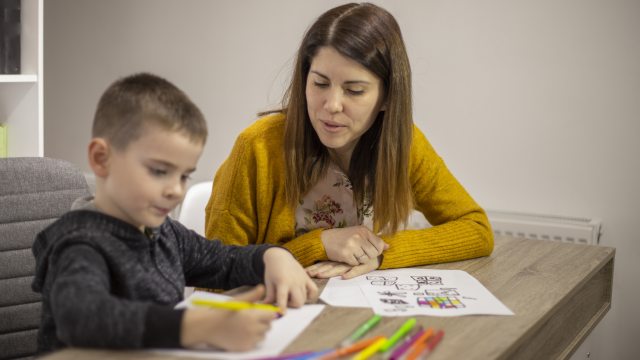
Talk with your child’s pediatrician at their next wellness check.
If you’re a parent, you play an important part in helping your child’s doctor spot symptoms of autism, says Julie Cheek, MD, a PeaceHealth pediatrician in Bellingham, Washington.
“Screening for autism is a routine part of your child’s medical check-ups — especially during the first few years of life,” she says.
Why early screening matters
Young children grow and change quickly. You can sometimes notice signs of autism in toddlers, but it’s not always easy to see. Early screening helps catch potential concerns sooner.
When children get support early, it’s easier to help them build communication, social and learning skills as they grow, she says.
When autism screening happens
Most children are screened for autism during regular well‑child visits. Doctors will take note about development at several stages in a child’s first five years of life.
Just as height and weight checks are done at every visit to mark physical change, autism screenings are routinely done for every child with formal screenings at ages 18 and 24 months.
What tools doctors use in screening for autism
Autism isn’t something you can diagnose with a medical test like bloodwork or a brain scan, says Dr. Cheek. The only way to check is by obtaining a developmental history and observing a child’s behaviors. That includes how a child moves, plays, talks and interacts with others and things around them.
Many clinics use short questionnaires to gather information from parents, grandparents or others who know a child well.
“Children will often act different at a check-up than they do at home or school. They might be shy around strangers or shut down if they feel scared. At a visit, we might not get a clear picture of their usual behavior,” she says.
PeaceHealth doctors use a common tool called the SWYC (Survey of Well‑Being of Young Children).
What parents do as part screening for autism
The SWYC is a short form. It’s best filled out by someone who knows the child well. It takes 15 minutes or less to complete.
It may include the following categories, depending on how old your child is:
- Cognitive, language and motor development
- Behaviors and Social-emotional/ development, including autism risk
- Family stress risk factors
Questions on the form vary slightly for different ages. But all forms make it easy to pick from multiple choice answer options.
“This screening tool helps you look at how your child interacts with their world,” says Dr. Cheek. “It’s also a way for you to talk with your child’s doctor about your child’s development — whether or not you have any concerns.”
What happens if a concern is found
A screening result does not mean your child has autism. It shows only that more information could be needed. That might include testing for hearing, vision or other exams to rule out other causes for the concern.
“If we identify concerns about development or autism we may refer a child to Early Intervention as well as to a provider who can do an autism-specific diagnosis,” says Dr. Cheek.
Referral for autism assessment varies by state. For example, in Washington, healthcare professionals with various credential types may be trained as part of a designated Autism Center of Excellence.
If your child needs early intervention, your pediatrician may refer you to an autism specialist in your area. That way, your child and family can get the kind of local support you need in school and other settings.
What to keep in mind with autism
Autism has become more common in recent years. Estimates show that 1 in 36 children are diagnosed with autism spectrum disorder.
Learning to live with autism is seldom easy. But there are several books, movies, tools and other resources available. Dr. Temple Grandin and other adults with autism have come to see it as part of what helped them succeed in life.
Early screening is a key way to help kids sooner than later.
“If you have concerns, talk with your child’s doctor,” says Dr. Cheek. “Be assured you’re not alone in trying to give your child what they need to thrive.”