
Finding Relief, Reclaiming Life: A New Option for Men Living with an Enlarged Prostate
|

For many men, getting older comes with a few expected inconveniences. But for millions, one of the most disruptive changes can be an enlarged prostate, a condition known as benign prostatic hyperplasia (BPH). Frequent trips to the bathroom, interrupted sleep, difficulty urinating and the constant feeling of not fully emptying the bladder can gradually chip away at quality of life.
Now, men in Northwest Washington have access to a new treatment option that is changing the conversation around prostate care.
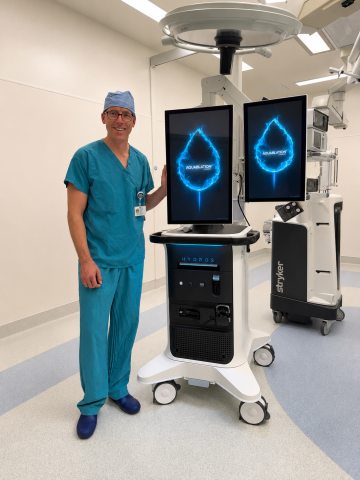
PeaceHealth St. Joseph Medical Center in Bellingham now offers Aquablation® therapy using the new HYDROS™ Robotic System, an advanced robotic platform that incorporates AI-assisted treatment planning designed to treat enlarged prostates with precision while helping preserve sexual function and urinary continence.
A Common Condition with a Major Impact
BPH affects millions of men, particularly after age 50. While the condition is not cancerous, its symptoms can be frustrating, embarrassing and even debilitating.
What often begins as a weaker urinary stream or more frequent nighttime bathroom visits can eventually interfere with work, travel, exercise and social activities. In some men, untreated BPH can contribute to urinary retention and complications such as bladder stones, urinary tract infections, bladder dysfunction and, in severe cases, kidney damage.
Many men simply learn to live with the symptoms, assuming they are an unavoidable part of aging.
But urology specialists say relief may be closer than many realize.
A Different Approach to Treatment
Aquablation therapy represents a new generation of prostate care. Unlike traditional surgical approaches, the procedure uses a heat-free waterjet combined with real-time ultrasound imaging and robotic technology to remove excess prostate tissue.
The new HYDROS Robotic System incorporates AI-assisted treatment planning to help physicians develop a treatment plan based on the patient’s prostate anatomy.
The approach allows the surgeon to target obstructive prostate tissue while planning treatment to avoid or minimize impact to anatomy important to sexual and urinary function.
"BPH is a widespread condition that severely compromises quality of life for countless men over age 50," says Daniel Rznicek, MD, of Pacific Northwest Urology Specialists. "With Aquablation therapy, men can reclaim their lifestyles and find relief from symptoms while preserving sexual function and continence, outcomes that have proven elusive with many traditional treatment modalities."
Getting Back to What Matters
For many patients, the greatest benefit is not simply symptom relief. It's the ability to return to everyday activities without constantly planning around restroom access or worrying about potential side effects from treatment.
Whether it's enjoying a full night's sleep, taking a road trip, spending time outdoors or simply making it through a meeting without interruption, improved urinary health can make a meaningful difference in daily life.
Aquablation therapy is supported by five years of clinical data showing durable symptom relief across prostates of varying sizes and shapes, while maintaining favorable outcomes for sexual function and urinary continence.
Expanding Access to Advanced Care
With the addition of the HYDROS Robotic System, PeaceHealth St. Joseph Medical Center is expanding access to leading-edge men's health care close to home.
As technology continues to transform medicine, innovations like Aquablation therapy are giving men more options to address common age-related conditions without compromising the quality of life they value most.
For men experiencing symptoms of an enlarged prostate, experts encourage talking with a healthcare provider about available treatment options. What many assume is simply part of getting older may, in fact, be a treatable condition with solutions that can help restore comfort, confidence and independence.


