A Circle of Care
|
How hospice caregivers, volunteers and community support helped one patient live her final chapter with dignity, comfort and connection.
The patient was surrounded by a circle of care.
A nurse provided comfort and managed symptoms. A chaplain offered spiritual support. A massage therapist eased anxiety and pain. A volunteer shared companionship and presence. Musicians filled the room with song.
For the patient, a 90-year-old woman who had fled a war-torn European country during World War II, the final chapter of life was not defined by illness. It was defined by the people who surrounded her with compassion, dignity and care. Every visit, conversation, song and act of kindness reflected a simple truth: hospice care is never the work of one person. It is the work of a community.
At Whatcom Hospice, the hospice program operated by PeaceHealth St. Joseph Medical Center, that community came together through an interdisciplinary team focused on caring for the whole person. Guided by PeaceHealth's belief in bringing hope, healing and peace, an interdisciplinary team collaborated to support the patient's physical, emotional, social, and spiritual well-being. The team included nurses, social workers, certified nursing assistants, spiritual care providers, a licensed massage therapist, and trained volunteers. Their goal was not simply to manage symptoms, but to help her experience comfort, meaning and connection throughout her journey.
One member of the patient's care team was chaplain Peter Strong, who supported the spiritual dimension of her journey.
"As her chaplain, I was able to connect with her on the spiritual level and affirm her strong faith and belief in God," he said.
Addressing the patient's needs required caring for far more than physical symptoms.
While Peter supported her spiritual well-being, massage therapist Amy Wylde helped ease both physical discomfort and emotional distress. Having lived through the hardships and trauma of World War II, the patient continued to carry those experiences with her decades later. As part of the interdisciplinary hospice team, Amy used massage therapy to help relieve not only generalized pain and anxiety, but also the lingering effects of trauma that resurfaced during the patient's final season of life.
"What made this situation different, and what sets us apart, is that we also were able to provide regular massage," Peter shared. "This helped her with the wartime trauma she experienced even to the end of her life."
While clinical and supportive services helped meet the patient's physical, emotional and spiritual needs, one volunteer brought something equally important: friendship.
Volunteer LaLani Baker offered companionship, presence and connection.
Their relationship did not begin with an instant bond. During LaLani's first visit, the patient looked at her and said, "I don't know why you are here."
"I said, 'I'm here because I want to be here. I just want to get to know you. I just want to hear your story.'"
What was intended to be a brief introduction stretched into a two-hour conversation. A friendship was born.
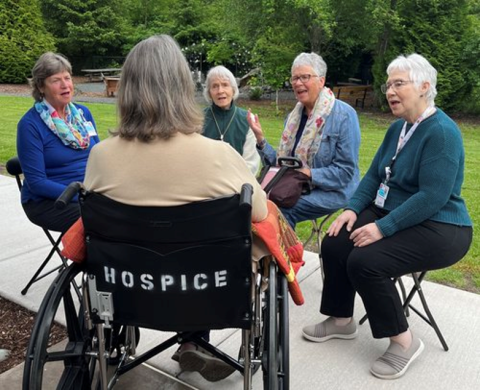
Over the next two years, LaLani visited nearly every week, often spending two or three hours at a time with the patient. Together they watched birds from her window, admired flowers in the courtyard, revisited stories from her remarkable life and, when she was feeling up to it, ventured out for ice cream and neighborhood strolls.
As meaningful as those visits were for the patient, they were equally meaningful for her daughter. Before each visit, LaLani checked in and encouraged her to take time for herself, knowing her mother was in caring hands.
According to volunteer coordinator Amie Carr, hospice volunteers complete extensive training specific to end-of-life care. Hospice is also unique among Medicare benefits in requiring volunteer participation. While the Medicare benchmark is volunteer hours equivalent to 5% of staff hours, the Whatcom Hospice volunteer program contributes approximately 24%, representing more than 13,000 volunteer hours each year.
Those hours create something difficult to measure but impossible to overlook: time.
Time to listen.
Time to sit quietly.
Time to celebrate a birthday.
Time to push a wheelchair across the street for an ice cream sundae.
Time to give an exhausted family caregiver a chance to rest.
Support from the Whatcom Hospice Foundation helps make many of these moments possible. The separately chartered nonprofit raises charitable support for services that extend beyond what Medicare and private insurance cover. Its investment in volunteer services and integrative therapies such as massage and acupuncture helps PeaceHealth St. Joseph's hospice teams provide the personalized support and human connection patients and families often need most.
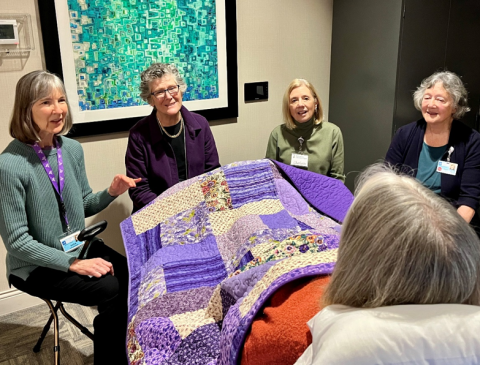
One of the patient's favorite experiences came from the Bellingham Threshold Singers, a volunteer group that offers bedside singing to people who are seriously ill or nearing the end of life. The singers visited regularly, becoming a familiar source of comfort and connection.
Mathilda Wheeler, who served as lead singer for many of those visits, said the affection between the patient and the singers was unmistakable.
"I adored my time with her. We all did," Mathilda said. "And she really did adore us."
The Power of Hospice Volunteers
At Whatcom Hospice, volunteers contribute more than 13,000 hours of service each year, representing approximately 24% of staff hours and far exceeding Medicare's 5% benchmark. Their impact extends beyond the numbers. Volunteers provide companionship, listen to life stories, celebrate milestones, support family caregivers and help ensure no patient faces the end-of-life journey alone. Support from the Whatcom Hospice Foundation helps sustain these volunteer and supportive care programs that bring comfort, connection and peace to patients and families.